
In brief
Bremelanotide, also listed as PT-141, is a cyclic seven-residue peptide that acts on melanocortin receptors. The FDA approved it as Vyleesi in 2019.
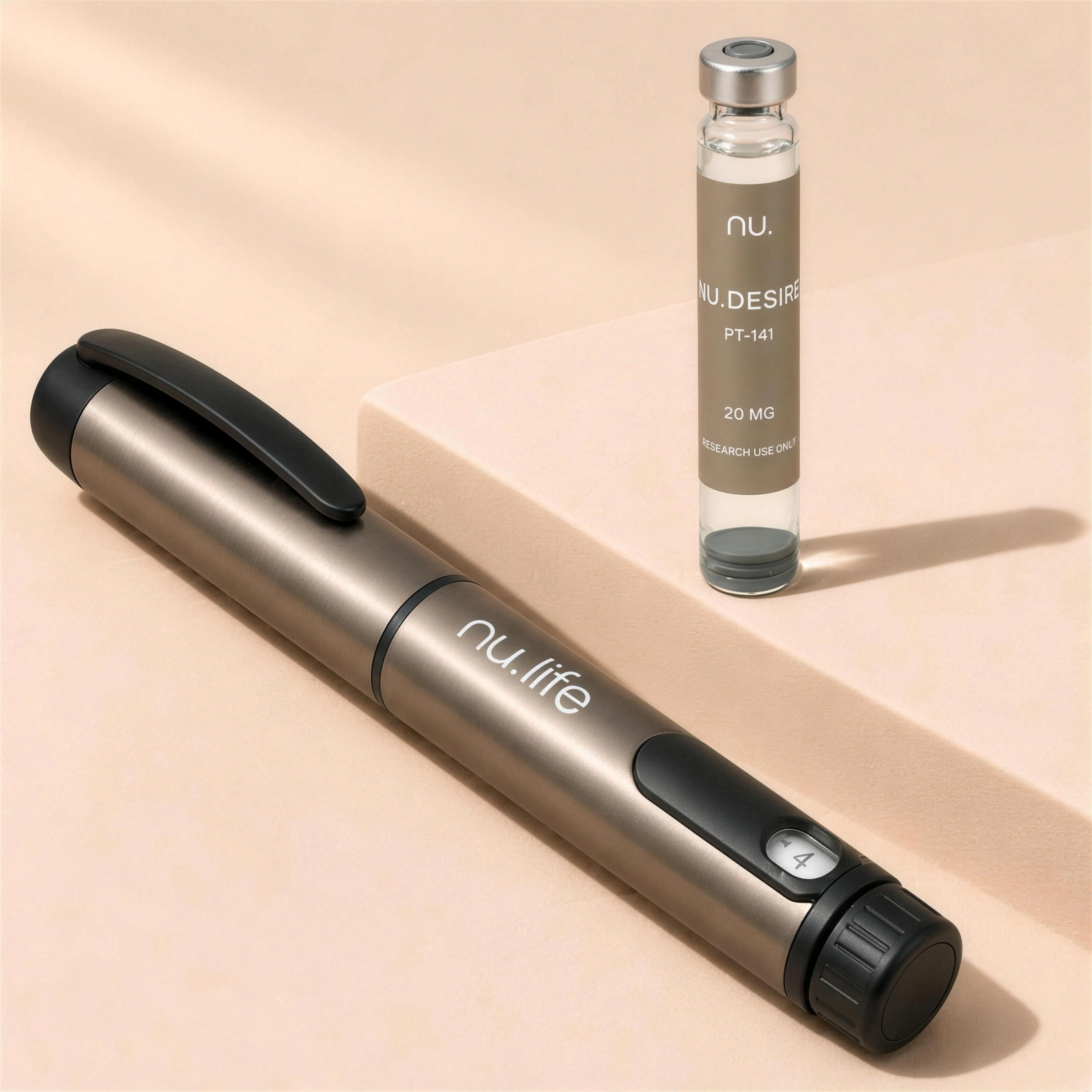
nu.life products are research compounds for laboratory use. They are not Vyleesi, and they are not medicines.
At a glance
- Status
- Approved medicine exists
- FDA record
- Vyleesi, NDA 210557, approved 21 June 2019
- Structure
- Ac-Nle-cyclo(Asp-His-D-Phe-Arg-Trp-Lys)-OH
- Molecular weight
- 1025.2 Da (free base)
Get it from nu.life
Same-day UAE delivery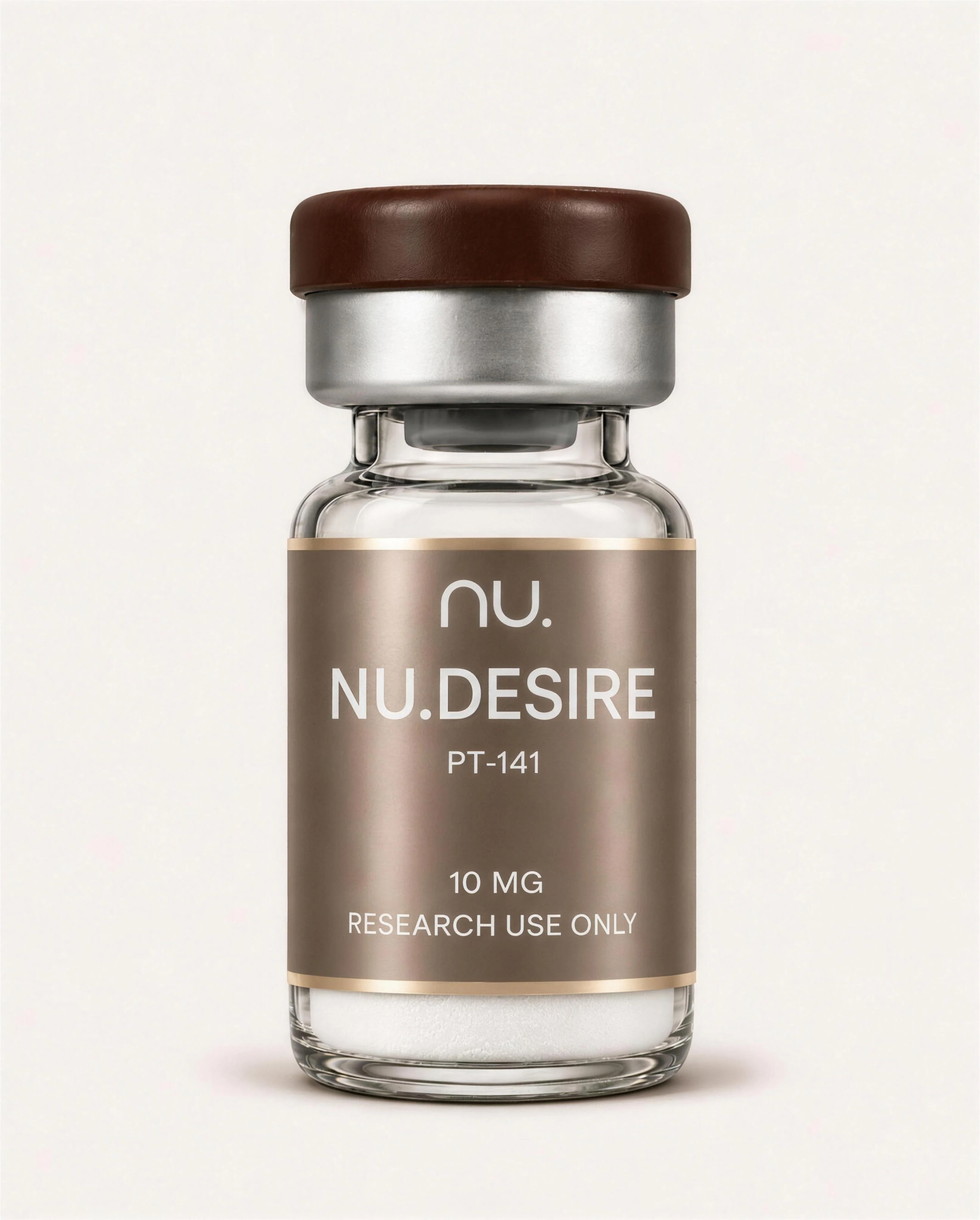
nu.life products are research compounds for laboratory use. They are not Vyleesi, and they are not medicines.
01
What is bremelanotide?
Bremelanotide is a synthetic peptide of seven residues, six of them closed into a ring. It starts with an acetylated norleucine, and one of its residues is D-phenylalanine, the mirror form of the usual amino acid. Those two are the brass pearls on the strand above.
PubChem lists PT-141 among its other names.
02
How it acts
The FDA label describes bremelanotide as a non-selective agonist of melanocortin receptors, binding them in this order of strength: MC1R, then MC4R, MC3R, MC5R and MC2R.
03
Regulatory status
The FDA approved bremelanotide as Vyleesi on 21 June 2019 (NDA 210557). It is a prescription medicine.
That approval covers Vyleesi only. Vials sold as PT-141, including ours, are research compounds and not Vyleesi.
04
Sequence
One-letter amino-acid code. Highlighted chips are non-standard residues.
Sources
Last reviewed: 26 November 2026. This guide is educational and is not medical advice. All products are intended for laboratory research purposes only and are not for human or animal consumption. They are not intended to diagnose, treat, cure, or prevent any disease.
